


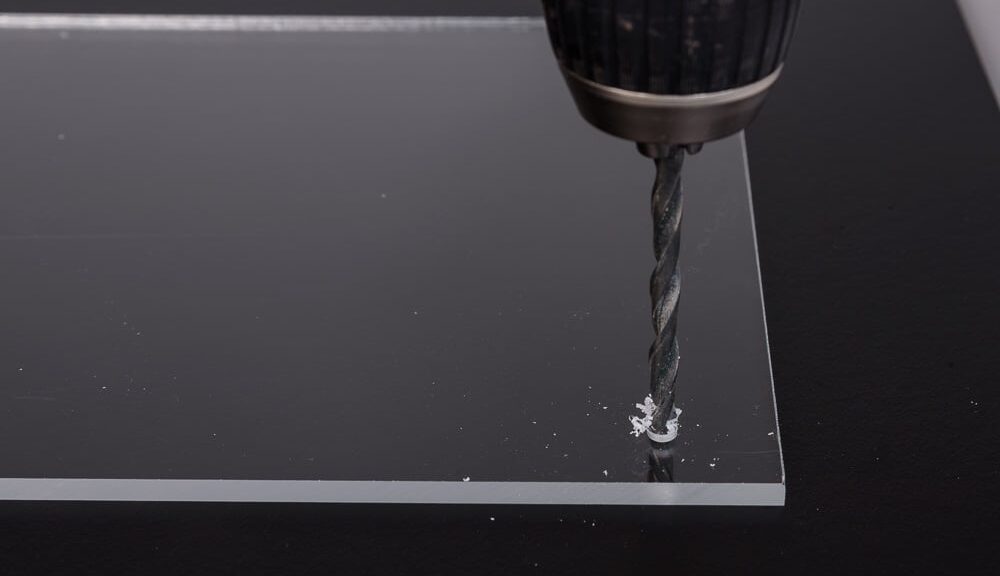
Drilling acrylic plastic sheets (also known as Perspex) requires precision and the right tools to avoid cracks or chips. Whether you’re handling a DIY project or professional fabrication, understanding how to correctly drill acrylic ensures clean, smooth holes and prevents damage to the sheet.
For best results, use drill bits designed specifically for acrylic.
Regular twist drills can be used, but need modification to keep the blade from grabbing and fracturing the plastic. Modify the bit by grinding small flats onto both cutting edges, so the bit cuts with a scraping action. If the drill is correctly sharpened and operated at the correct speed, two continuous spiral ribbons will emerge from the hole.
Pro Tips for Drilling Acrylic Sheets
- Always use sharp drill bits designed for acrylic or modified twist drills.
- Start with a small pilot hole before drilling the full-size hole.
- Support both sides of the sheet to avoid vibration and cracking.
- Keep the protective film on during drilling to prevent scratches.
- Use slow, steady pressure; never force the drill through.
- Apply water or drilling oil as a coolant for thick sheets to reduce heat build-up.
Safety Precautions
- Wear safety glasses and gloves during drilling.
- Secure the sheet firmly before drilling.
- Avoid overheating, which can cause melting or warping.